

Every summer, our LinkedIn feed fills with excellent advice from podiatrists about choosing supportive shoes and sandals, preventing heel pain, avoiding flip-flop injuries, and protecting feet during vacations. These posts educate patients, encourage preventive care, and often lead to more appointments.
That’s exactly what every practice wants a busy schedule.
But here’s what many practice owners discover behind the scenes:
A full appointment book doesn’t automatically translate into healthy cash flow.
As specialists in podiatry medical billing, we see a different side of summer. While patients enjoy vacations and outdoor activities, practice owners are balancing increased patient demand with staffing challenges, documentation pressure, insurance requirements, and revenue cycle bottlenecks.
The result? Summer can become one of the busiest and riskiest seasons for your revenue.
The Clinical Reality vs. The Business Reality
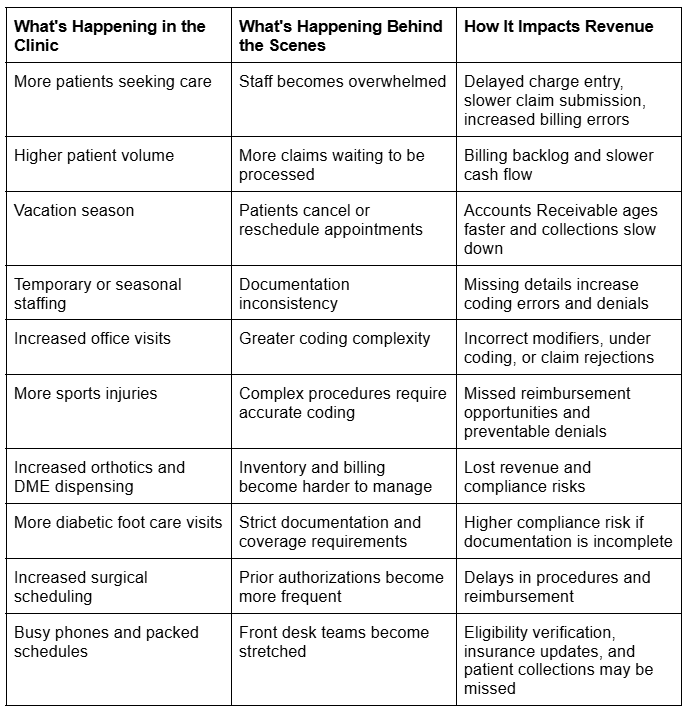
Summer Doesn’t Create Revenue Problems. It Exposes Them
Many of these issues already exist throughout the year.
Summer simply amplifies them.
When appointment schedules are packed, even small workflow gaps become expensive. A delayed claim submission, an overlooked modifier, incomplete documentation, or a missed authorization can create weeks or even months of delayed reimbursement.
The irony is that practices often work harder during summer while collecting revenue more slowly.
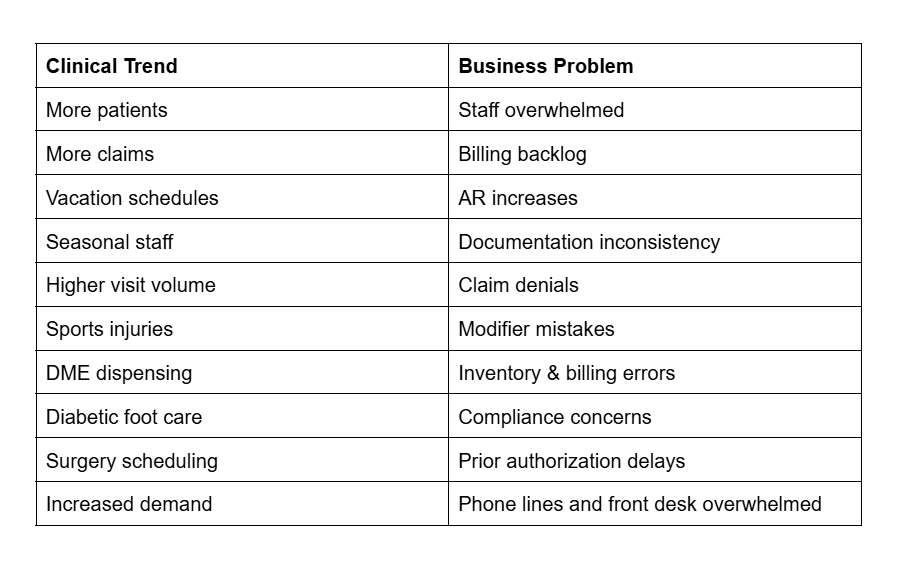
More Patients Should Mean More Revenue. Not More Administrative Stress
As patient volume grows, so does the workload for your billing team.
That means:
- More insurance verification
- More coding decisions
- More modifier accuracy
- More claim submissions
- More denial management
- More patient balances to collect
- More follow-up on aging Accounts Receivable
Without the right revenue cycle processes, increased patient volume can overwhelm even experienced teams.
The Practices That Finish Summer Strong Think Beyond Clinical Care
Successful practices understand that patient care and revenue cycle management go hand in hand.
While physicians focus on diagnosing and treating patients, the financial side of the practice must continue moving just as efficiently.
That includes:
- Prompt claim submission
- Accurate coding
- Timely denial follow-up
- Consistent Accounts Receivable management
- Compliance with payer requirements
- Continuous monitoring of key performance indicators
These aren’t just administrative tasks—they’re essential to maintaining a financially healthy practice.
A Question Worth Asking This Summer
Your patients are preparing for vacations.
Your team is preparing for a busier schedule.
Is your revenue cycle prepared too?
If your practice is experiencing longer Accounts Receivable days, increasing claim denials, slower reimbursements, or billing bottlenecks during the busiest months of the year, now is the perfect time to evaluate your revenue cycle before those issues grow into larger financial challenges.
At ParaDocs Medical Revenue Center, we specialize exclusively in podiatry medical billing. Our team understands the unique coding, documentation, compliance, and reimbursement challenges that podiatry practices face especially during seasonal volume increases.
Because summer should increase your collections—not your claim denials.
Complimentary Revenue Health Assessment
Wondering whether your revenue cycle is keeping pace with your patient volume?
Schedule a complimentary Revenue Health Assessment with ParaDocsMRC. We’ll help identify opportunities to improve cash flow, reduce denials, and strengthen your billing performance so your practice can make the most of the busiest season of the year.
🩺 Want a deeper look? Book a consultation with our team: https://www.paradocsmrc.com/get-started/
📬 Join 2,000+ podiatry professionals on our newsletter list: https://www.paradocsmrc.com/newsletter/
📞 Schedule a revenue leak audit: Phone: (718) 888-0841